One Arm, Infinite Beat: Rick Allen’s Unstoppable Return to the Drums

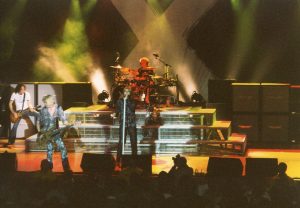
Photo by MandyJC72 (https://www.flickr.com/people/42014225@N08)
On New Year’s Eve 1984, Rick Allen seemed to have the world at his feet. At just 21 years old, he was already the drummer for Def Leppard, the British rock band that had stormed the charts with hits like “Photograph” and “Rock of Ages.” They were on the cusp of global superstardom after years of hard work and rising fame. Allen, who had joined the band at age 15, brought explosive energy and precision to their sound. Life felt full of promise as he drove his black Corvette along a winding country road near Sheffield, England, with his girlfriend Miriam Barendsen beside him.
Then it all changed in an instant. While passing another car on the A57, Allen lost control on the slick road. The Corvette spun, flipped repeatedly, and smashed through a stone wall before coming to rest in a field. The seat belt failed under the force of the crash. It entangled his left arm and ripped it from his body when he was ejected through the sunroof. Allen landed in the grass, conscious but gravely injured. In a stroke of luck, a passing off-duty police officer and a nurse rushed to his aid and helped stabilize him until paramedics arrived. His arm remained behind in the wreckage. Doctors at the hospital managed to reattach it initially, but an infection soon set in. On January 4, 1985, they had no choice but to amputate the limb at the shoulder to save his life.
The news hit like a thunderclap. For a drummer whose career depended on both arms for complex rhythms and powerful fills, the loss seemed insurmountable. Allen later admitted he believed his music days were finished. Lying in his hospital bed during those early weeks, he grappled with shock, pain, and a deep sense of defeat. Physical therapy began almost immediately, but the emotional toll was heavier. How could he ever play again? Def Leppard had just begun recording their next album, and the future of the band hung in the balance.
Still, Allen refused to surrender. Support poured in from all directions. His bandmates, family, and fans sent thousands of letters from around the world, offering encouragement and belief in his potential. Producer Mutt Lange visited often and lit a fire under him with tough love and optimism. Even strangers, including a group of Hare Krishnas who brought healthy meals daily, helped lift his spirits. Allen left the hospital on January 29, 1985, just one month after the crash. By February 22, he was back in the studio with Def Leppard in Holland, determined to find a way to continue with the band.
The real work of adaptation started there. Allen knew he could not drum the way he always had. He worked with drum manufacturer Simmons to design a custom electronic kit that blended acoustic and electronic elements. Foot pedals took over many duties once handled by his missing left arm. His right hand and both feet now carried the full load of rhythms that once required two arms. It was not a simple substitution. Allen had to rewire his entire approach to percussion. New neural pathways formed in his brain, allowing his body to compensate in ways he had never imagined. What began as frustration slowly became intuition. He practiced relentlessly, sometimes for hours each day, pushing through fatigue and phantom pain from the lost limb.

Challenges mounted at every turn. Physically, he battled balance issues and the strain of using his feet for intricate patterns that demanded split-second timing. Emotionally, the doubts crept in during long rehearsals when old habits failed and new ones felt awkward and difficult. The band faced pressure too. Some wondered if they should replace him to keep their forward momentum. Instead, they chose loyalty. Def Leppard adapted their song arrangements and overall sound to fit Allen’s new style. They incorporated more electronic drums into their recordings, which added a modern edge that perfectly suited the era. This collective shift strengthened their bond and pushed their music in new directions.
By August 16, 1986, Allen stood ready for his triumphant return. Def Leppard performed at the Monsters of Rock festival in Donington Park before 75,000 fans. The crowd roared as he took the stage, proving that one arm could deliver the thunderous beat the band needed. The performance was electric and emotional. It marked not just a comeback but a declaration that great adversity could fuel greatness.
The years that followed cemented his legacy and silenced doubts. In 1987, Def Leppard released Hysteria, their most successful album ever. Tracks like “Pour Some Sugar on Me” and “Love Bites” topped charts worldwide, showcasing the evolved sound born from Allen’s adaptation. He has remained the band’s drummer ever since, touring relentlessly and performing with the same passion that defined his early days. In 2019, the group was inducted into the Rock and Roll Hall of Fame, with Allen’s story of resilience highlighted as a cornerstone of their journey.
Today, Rick Allen continues to inspire millions of people far beyond the stage. He often speaks about how the accident reshaped his perspective on life. What once felt like an ending became a new beginning. He credits the unwavering support of his band, family, and fans for helping him discover inner strength he never imagined he possessed. His custom drum setup remains a marvel of innovation, and young musicians study his technique as proof that limitations can spark creativity.
Allen’s story reminds us all that true power lies not in avoiding hardship but in truly rising above it. A single moment of tragedy could have silenced his drums forever. Instead, it amplified his resolve. With one arm and an unbreakable spirit, he has kept the beat alive for decades, showing the world that determination can turn loss into legend. In the world of rock and roll, very few tales match the raw inspiration of Rick Allen beating the odds and rocking on.