The Tale Behind The Tune: “Smoke On The Water” By Deep Purple
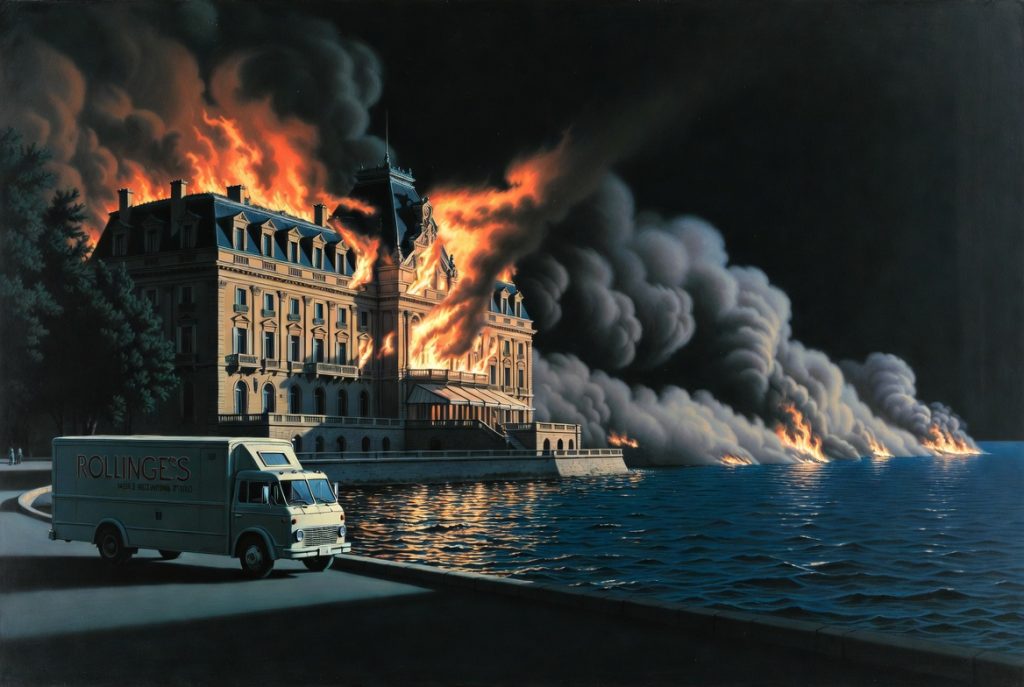
It has to be one of the first most instantly recognizable classic rock hits ever recorded. Few tracks have achieved the legendary status of “Smoke On The Water” by Deep Purple. Released in 1972 as part of the album Machine Head and what makes it even more special is the true story that inspired its lyrics a tale of chaos fire and quick thinking that unfolded in a picturesque Swiss town.
It all started in early December of 1971 when the British rock band Deep Purple arrived in Montreux Switzerland. The group which included guitarist Ritchie Blackmore vocalist Ian Gillan bassist Roger Glover keyboardist Jon Lord and drummer Ian Paice had come to record their new album. They had planned to use the Montreux Casino as their studio setting up the famous Rolling Stones Mobile Studio truck on the premises. The casino was a popular venue that had just hosted the Montreux Jazz Festival and it was scheduled for winter renovations allowing the band to take over for a while.
On the night of December 4 the casino was alive with energy as Frank Zappa and the Mothers of Invention took the stage for what was supposed to be the final show before the break. Deep Purple members were in the area with some even in the audience ready to begin their own sessions the very next day. As the concert progressed into its later stages during a synthesizer solo on the track King Kong disaster struck. An audience member fired a flare gun toward the ceiling which was covered in rattan material. The flare ignited the roof and within moments the entire building was engulfed in flames.
Panic was minimal at first as the fire seemed contained but it quickly spread turning the casino into a massive inferno. The band members watched in horror from a nearby spot as the structure burned. Smoke billowed out across Lake Geneva creating a striking and memorable visual that would later define the song. Thankfully, no one was seriously hurt in the blaze but the casino was completely destroyed along with much of the equipment belonging to Zappa and his band.
The next few days were chaotic for Deep Purple. Their planned recording location was now a smoldering ruin forcing them to scramble for alternatives. Local help came from Claude Nobs the founder of the Montreux Jazz Festival and a volunteer firefighter who had bravely assisted during the evacuation. Known affectionately as Funky Claude he would later be immortalized in the song lyrics.
With time running out, the band first attempted to record at a local theater known as the Pavilion. They managed to lay down some backing tracks there including an early version of what would become “Smoke On The Water.” That legendary riff had been created by Ritchie Blackmore on his Fender Stratocaster guitar. It was a simple yet powerful four note sequence in a minor key that he later jokingly compared to an inversion of a theme from Beethoven’s Fifth Symphony. The other members joined in with drums bass and organ adding to the driving sound. Neighbors soon complained about the noise and authorities shut down the session after just one day.
Undeterred the band found another solution. They moved to the Grand Hotel de Territet a nearly empty grand establishment overlooking the lake. There they transformed hallways and staircases into makeshift recording spaces. Cables from the mobile studio were run through windows and the group worked tirelessly to capture the album. It was in this unusual environment that the full song finally took shape.
Roger Glover the bassist had been haunted by the images of the fire. A few days after the incident he awoke from a dream with the perfect title in his head: “Smoke On The Water.” It perfectly captured the scene of smoke drifting over the water from the burning casino. Ian Gillan then crafted the lyrics around this title turning the events into a first person narrative. The words describe arriving in Montreux, the Zappa concert, the flare gun incident and the subsequent search for a new recording location. Lines like Funky Claude was running in and out pulling kids out of the ground paid tribute to Nobs heroic efforts.
The song was added to the album almost as an afterthought because the band needed one more track to complete it. What started as a quick solution became the unquestioned standout piece. The music combined Blackmore’s riff with Lords distorted organ, Paices steady drums and Glovers bass creating a heavy yet melodic rock masterpiece.
Machine Head was released in 1972 and quickly became one of Deep Purples most successful albums. “Smoke On The Water” was issued as a single the following year reaching high positions on charts around the world including number four in the United States. Some of us are able to recall the song’s heavy rotation on rock radio stations during that that time. Its enduring appeal lies not just in the music but in the authentic story it tells a reminder of how real life drama can fuel great art.
Over the decades the track has been celebrated as a cornerstone of rock music. It has inspired countless guitarists and appeared in numerous lists of the greatest riffs and songs of all time. Deep Purple has performed it live thousands of times often extending the instrumental sections for audience singalongs. The band even formed a special connection with Montreux installing memorials and maintaining ties to the town.
The creation of “Smoke On The Water” stands as a testament to resilience and creativity under pressure. What could have been a major setback for the band instead sparked one of their greatest hits. Today when listeners hear that iconic opening riff they are transported back to a fateful night in Switzerland where fire met music and gave birth to a legend that continues to resonate even today.