The Tale Behind The Tune: “Dreams” by Fleetwood Mac
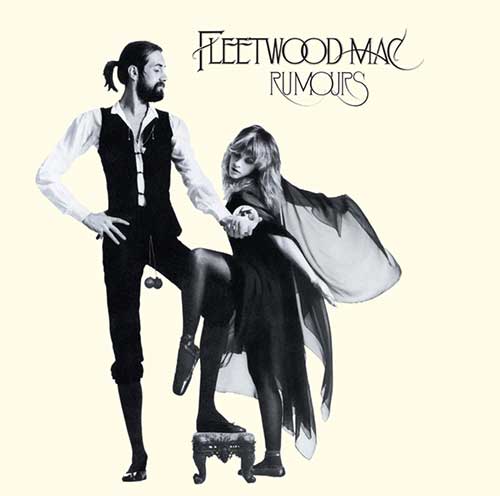
In early 1976, Fleetwood Mac was deep into the sessions for what would become Rumours, one of the best-selling and most emotionally charged albums in rock history. The atmosphere at the Record Plant in Sausalito, California, was pretty tense. Stevie Nicks and Lindsey Buckingham were ending their long romantic relationship. John and Christine McVie were divorcing and Mick Fleetwood was dealing with the collapse of his own marriage. The band soldiered on and kept working through the personal wreckage, channeling the tension into songs that still define classic rock radio decades later. Out of that charged environment came “Dreams,” the only number-one single Fleetwood Mac ever scored on the Billboard Hot 100.
Stevie Nicks has told the origin story quite consistently through the decades. One day during the Sausalito sessions she was not needed in the main studio so she took a Fender Rhodes electric piano and slipped into a secondary room that belonged, or had belonged, to Sly Stone of Sly and the Family Stone. The space was distinctive: black and red décor, a sunken pit in the middle that held a piano, and a large black-velvet bed with Victorian drapes. Nicks sat on the bed, keyboard in front of her, and began to play. She found a simple drum pattern, switched on a small cassette recorder, and wrote “Dreams” in roughly ten minutes.
She has said she liked the dance-like beat right away because it felt unusual for her. The resulting demo was skeletal, just her voice and the Rhodes over that steady pulse. When she returned to the main room and played the cassette for the band, reactions were mixed at first. Christine McVie later recalled that an early piano version sounded boring, consisting of only three chords with a single repeating note in the left hand. Buckingham, despite the personal strain between him and Nicks, heard potential. He took those same three chords and shaped them into distinct sections so that the song felt like it moved and developed rather than simply repeating. That arrangement turned a modest idea into something hypnotic and complete.
The lyrics reflected Nicks’s more philosophical approach to the breakup while Buckingham’s “Go Your Own Way” was direct and angry, “Dreams” stayed cooler and more observational. Lines such as “Players only love you when they’re playing” carried a pointed edge aimed at her former partner, yet the overall tone remained reflective rather than accusatory. Nicks has described the song as an attempt to be philosophical about the end of the relationship. The closing image of rain washing someone clean drew on an idea she associated with Native American tradition, the notion that rain can free a spirit. She has noted that writing songs about their shared experiences, even painful ones, may have kept the band from tearing itself apart completely.
Recording the track required both speed and careful craft. A basic version was cut the next day in Sausalito with Nicks on the Rhodes and singing live. Recording assistant Cris Morris later confirmed that the original drum track and Nicks’s vocal from those early takes were kept. Guitars and bass were added later when the sessions moved to Los Angeles. Producer and engineer Ken Caillat wanted a locked, hypnotic groove. Mick Fleetwood, an solid and fluid drummer, naturally varied his playing from take to take. To achieve the consistency the song needed, Caillat and the team created an eight-bar drum loop from Fleetwood’s performance. Caillat has joked that when people praise the classic Fleetwood Mac rhythm section on “Dreams,” they are often praising a loop.

Lindsey Buckingham’s guitar work received special treatment. The electric guitar signals were split multiple ways, including direct, miked, amp-head, and volume-pedal paths, then panned across the stereo field so the parts seemed to drift and move. Christine McVie’s sparse piano was eventually replaced by vibraphone with delay, adding atmosphere. Fleetwood later overdubbed congas that enter around the “thunder only happens when it’s raining” line. For the lead vocal, Nicks’s original guide take proved impossible to improve upon. She recorded additional passes, but the first performance, with its slight imperfections and even some drum leakage, remained the keeper. Harmonies were carefully layered by Nicks, Christine McVie, and Buckingham, then doubled for fullness.
“Dreams” was released as a single in March 1977 and reached number one in the United States that June. It remains Fleetwood Mac’s sole chart-topper in America. The parent album Rumours went on to sell more than forty million copies worldwide and became a defining document of 1970s rock. The song itself has proven unusually durable, returning to the charts and cultural conversation generations later through film, television, and social media. Personally, I remember the song as an almost constant companion in the late 1970s because my friend — whose car we often cruised around town in — would pop the Rumours cassette into the car stereo every time.
What makes the creation story compelling is its combination of speed and circumstance. A ten-minute writing session in a borrowed, velvet-draped room, a skeptical first listen, a clever rearrangement of three chords, a drum loop for hypnotic consistency, and a vocal take that could not be bettered. All of it happened while the five members of Fleetwood Mac were living through the very relationships the song describes. The result was not just another track on a successful album. It became the group’s most commercially successful single and one of the purest examples of how personal turmoil, filtered through strong songwriting and studio craft, can produce something lasting and strangely serene.