The Tale Behind The Tune: Journey’s “Don’t Stop Believin’”
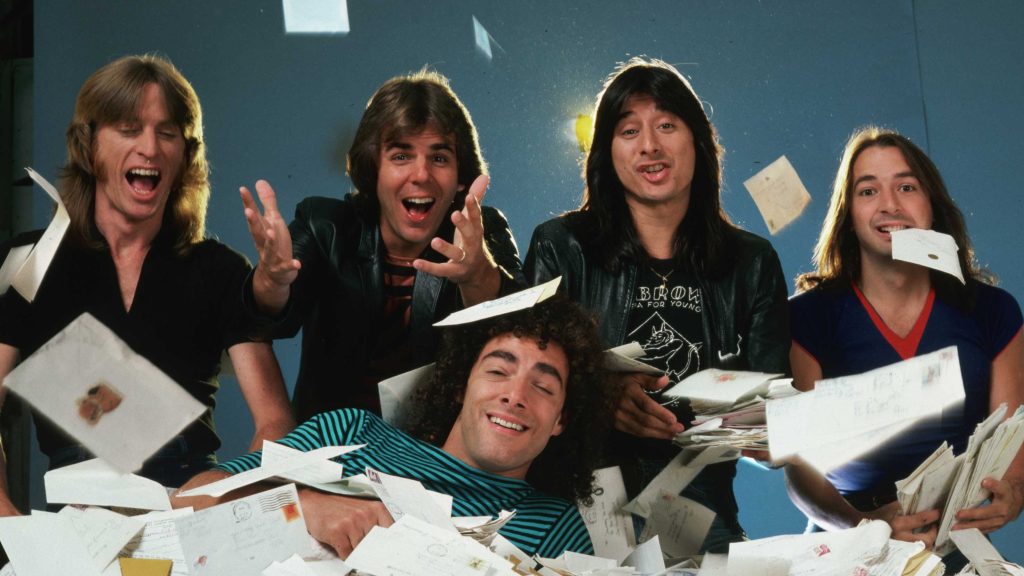
If there was ever a more recognizable classic rock song I don’t think I can name it. Few songs from any genre command instant recognition like Journey’s “Don’t Stop Believin’.” The moment those iconic piano chords ring out listeners are transported. Released in 1981 as the second single from the album Escape, the track has transcended its era to become a cultural touchstone. It is the ultimate underdog anthem, a sing-along staple at karaoke nights, sports arenas, and family road trips. Yet its path to immortality began not with stadium-sized ambition, but with a simple, heartfelt pep talk from a father to his struggling son.
Journey entered the 1980s at a crossroads. Formed in 1973 as a progressive-rock outfit led by guitarist Neal Schon and keyboardist Gregg Rolie (both veterans of Santana), the band had enjoyed modest success with hits like “Lovin’, Touchin’, Squeezin’” and “Any Way You Want It.” By 1980, however, they sought a more radio-friendly, arena-ready sound. Rolie departed, recommending Jonathan Cain, the keyboardist from the British band The Babys, as his replacement. Cain joined just in time for the recording of Escape, the group’s seventh studio album, which proved to be their commercial breakthrough. Co-produced by Kevin Elson and Mike Stone at Fantasy Studios in Berkeley, California, the album captured Journey at the peak of their melodic hard-rock prowess.
The song’s genesis traces back to 1977, years before Cain ever entered Journey’s orbit. As a young man he was living on Los Angeles’ Sunset Strip, chasing rock-and-roll dreams that seemed perpetually out of his reach. One particularly discouraging day, he phoned his father back home. The elder Cain, a working man who had seen his own share of setbacks, delivered a no-nonsense dose of encouragement: “Don’t stop believing, or you’re done, dude.” Those eight words lodged in Cain’s memory. He scribbled the phrase in a notebook and carried it like a talisman. When he finally joined Journey in 1980, the title became the seed for what would evolve into the band’s signature song.
Songwriting for Escape took place in a rented warehouse in Oakland. Cain, Perry, and Schon worked collaboratively, crediting the final composition to all three. They built the track “backwards,” starting with the chorus hook and title phrase. Perry and Cain crafted the narrative lyrics around two dreamers—a small-town girl and a city boy—boarding a “midnight train goin’ anywhere.” The imagery was universal: young people leaving behind familiar streets in search of something bigger. Perry famously suggested the line “just a city boy, born and raised in south Detroit,” even though no such neighborhood exists. “It just sounded so beautiful,” he later explained. Cain later defended the poetic license: it represented “the city of possibilities in your mind.” Schon contributed the driving bass line that underpins the verses, while Cain layered in the now-legendary piano and synthesizer parts. Drummer Steve Smith rounded out the arrangement with a crisp, syncopated rock backbeat that gave the song its propulsive energy.
Recording sessions were remarkably efficient. The instrumental track was laid down in a single take after Perry, suffering from a cold, stepped out briefly. When he returned the next week, he nailed his lead vocal in one pass. The entire album was completed under budget in about two months time. Released on July 17, 1981, Escape shot to No. 1 on the Billboard 200 and eventually earned diamond certification for 10 million U.S. sales. “Don’t Stop Believin’” climbed to No. 9 on the Hot 100, which was respectable but far from blockbuster status at the time. Critics initially dismissed it as slick and overly commercial. Yet the song’s anthemic qualities with its soaring melody, relatable story, and late-arriving, fist-pumping chorus, ensured it would later become Journey’s calling card.
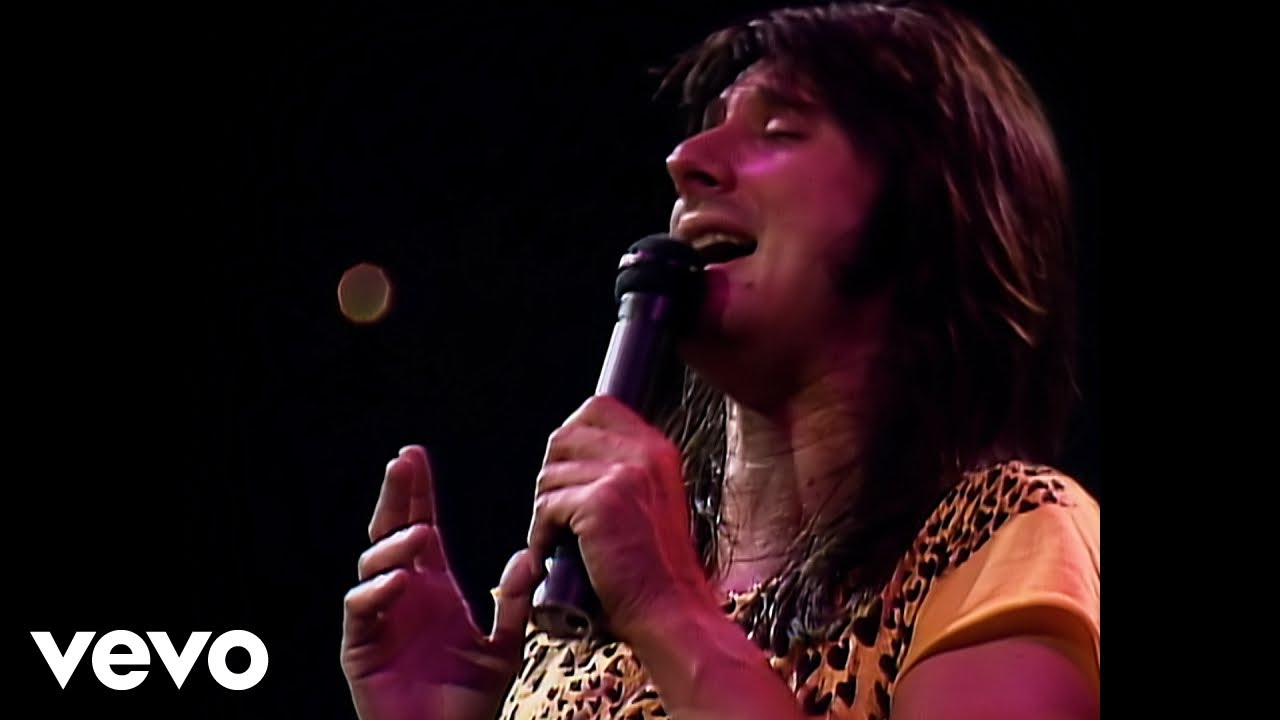
Its true explosion into cultural dominance would come decades later in 2007 when the final episode of HBO’s The Sopranos used the track in a poignant, open-ended diner scene that left audiences breathless. Digital downloads surged. Two years later, the Glee cast’s version introduced it to a new generation, charting even higher in some markets than the original. Sports teams embraced it as a rallying cry: the Chicago White Sox played it during their 2005 World Series run; Detroit Red Wings fans belt out “south Detroit” at home games; the San Francisco Giants had Perry himself lead the crowd in 2014. It also became a karaoke and wedding-reception staple, a soundtrack for graduation montages and victory parades. By 2017, it had sold more than seven million digital copies in the U.S. alone, earning the title of the best-selling digital track from the 20th century. In 2022, the Library of Congress added it to the National Recording Registry for its “culturally, historically, or aesthetically significant” impact. Rolling Stone ranked it No. 133 on its 500 Greatest Songs list, and Forbes has called it the “biggest song of all time” based on streams, sales, and enduring popularity. Something the group likely never dreamed of way back in 1980.
What explains its timeless appeal? The message is deceptively simple: hold onto hope, even when the road is uncertain. In an age of economic anxiety, fractured dreams, and short attention spans, “Don’t Stop Believin’” offers reassurance that perseverance really does matter. Musically, it balances accessibility with craft that features a piano riff that is instantly hummable, Perry’s voice conveys both vulnerability and triumph, and the arrangement builds to a euphoric release. It feels both personal and communal, inviting everyone in the room to sing the final chorus at the top of their lungs.
More than four decades after its release, “Don’t Stop Believin’” could be considered Journey’s greatest gift to the world. What began as a father’s loving advice to a discouraged musician became a global rallying cry. In the words of Jonathan Cain himself, the song was written so that “every young person has a dream and sometimes where you grow up isn’t where you’re destined to be.” That promise still resonates, serving as proof that sometimes the most powerful anthems are born not from grand ambition, but from the quiet courage to just keep going.