The Tale Behind The Tune: “The Trees” by Rush
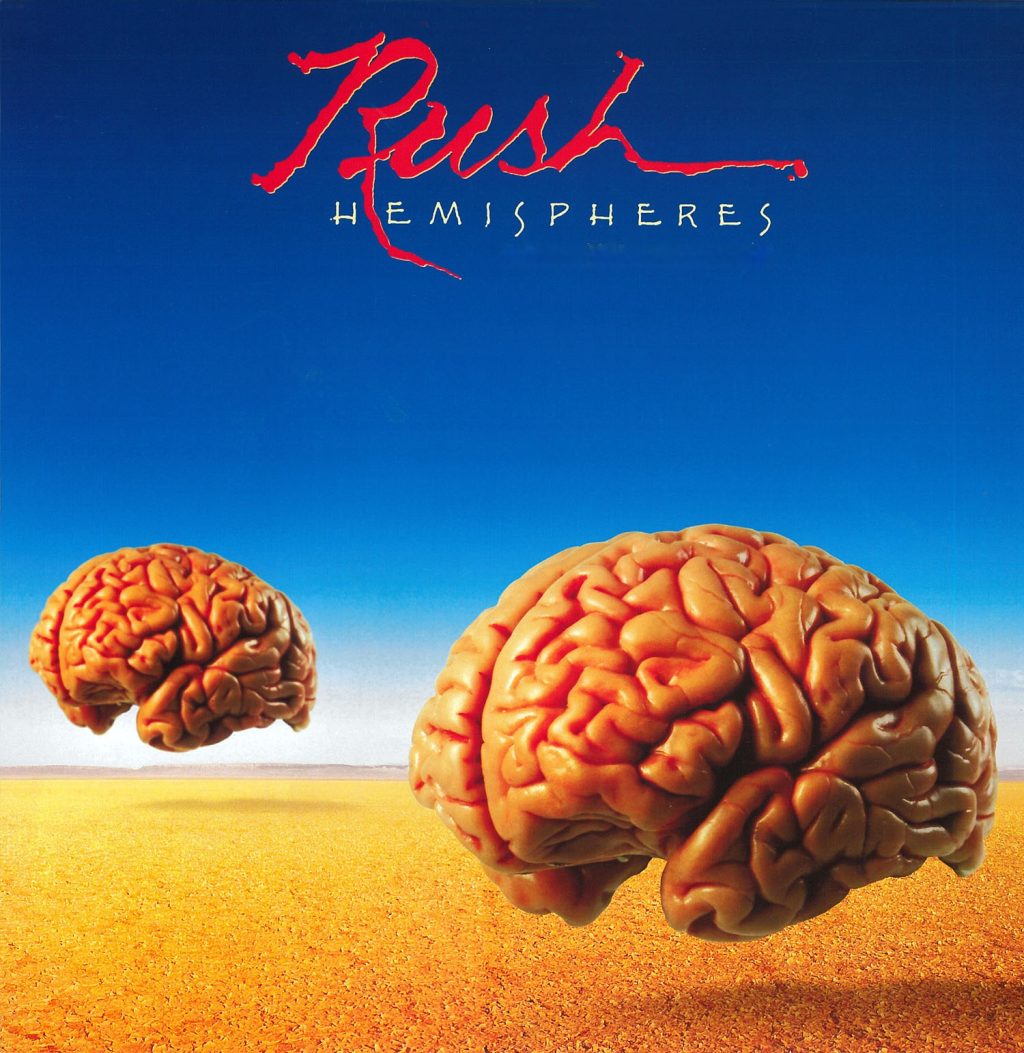
One of my favorite but somewhat lesser known songs by Rush is “The Trees” from the band’s 1978 album Hemispheres. Clocking in at just under five minutes, the song tells a deceptively simple tale about a forest where maple trees grow resentful of the taller oak trees that block their sunlight. Seeking a permanent solution to their dilemma, the maple trees decide to form a union and demand equal access to the light. In the end, all the trees are cut down to the same height by hatchet, axe, and saw. What began as a quick lyrical sketch by drummer Neil Peart evolved into a prog rock staple that fans still debate decades later.
Peart, who wrote the lyrics while Geddy Lee and Alex Lifeson composed the music, always traced the song’s birth to a sudden burst of inspiration. In a 1980 interview with Modern Drummer magazine, he recalled the moment clearly. “It was just a flash,” he said. “I was working on an entirely different thing when I saw a cartoon picture of these trees carrying on like fools. I thought, ‘What if trees acted like people?’ So I saw it as a cartoon really, and wrote it that way. I think that’s the image that it conjures up to a listener or a reader. A very simple statement.” He later told New Musical Express that the idea struck him right after a gig. The entire lyric came together in about five minutes, making it the fastest song he had ever written.

At the time, Rush was deep into the recording of Hemispheres at Rockfield Studios in rural Wales. The band had just finished the ambitious side-long suite “Cygnus X-1 Book II: Hemispheres,” a complex exploration of reason versus emotion. “The Trees” offered a sharp contrast to that theme: a concise, story-driven piece built around shifting time signatures and a memorable acoustic-electric guitar interplay. Lee has since remembered the track fondly, noting how the natural surroundings at the studio seemed to fit the woodland theme perfectly. The song was released as a single in early 1979 and became a surprise radio hit on FM stations across North America.
Although Peart insisted the song carried no heavy political message at first, its themes invited interpretation almost immediately. The maples’ union and the resulting forced equality struck many listeners as a pointed comment on collectivism. Peart himself later described the track in his 2007 book Roadshow: Landscape With Drums as “a parable about collectivism.” In a 2023 reflection, Lee called it “a comment on forced equality” while acknowledging that the band’s views in their twenties had been more black-and-white than the gray realities life eventually revealed.
Whatever its deeper intent, “The Trees” captured Peart’s gift for transforming everyday observations into vivid allegories. The cartoonish origin story he described never overshadowed the song’s staying power. It remained a live staple and a reminder that sometimes the most lasting art springs from the simplest flashes of imagination. Nearly fifty years on, the maples and oaks still stand as a testament to Rush’s unique blend of storytelling and musicianship.