Let There Be Light – How Queen Sneaked a 40-Ton Lighting Beast Past South American Customs
In the winter of 1981, Queen wasn’t satisfied to just tour South America—they staged a quiet and pretty epic logistical coup. Fresh off the global dominance of The Game, the band decided to conquer the continent’s football stadiums at a moment when Argentina was still ruled by a brutal military junta and Brazil was emerging from dictatorship. What they hauled south was no ordinary road kit. It was a full-scale rock colossus: roughly 40 tons of equipment flown in from Miami and Los Angeles, including scaffolding, sound towers, artificial turf to cover prison moats, and most spectacularly, a massive custom lighting rig that dwarfed anyone in the region had ever seen.
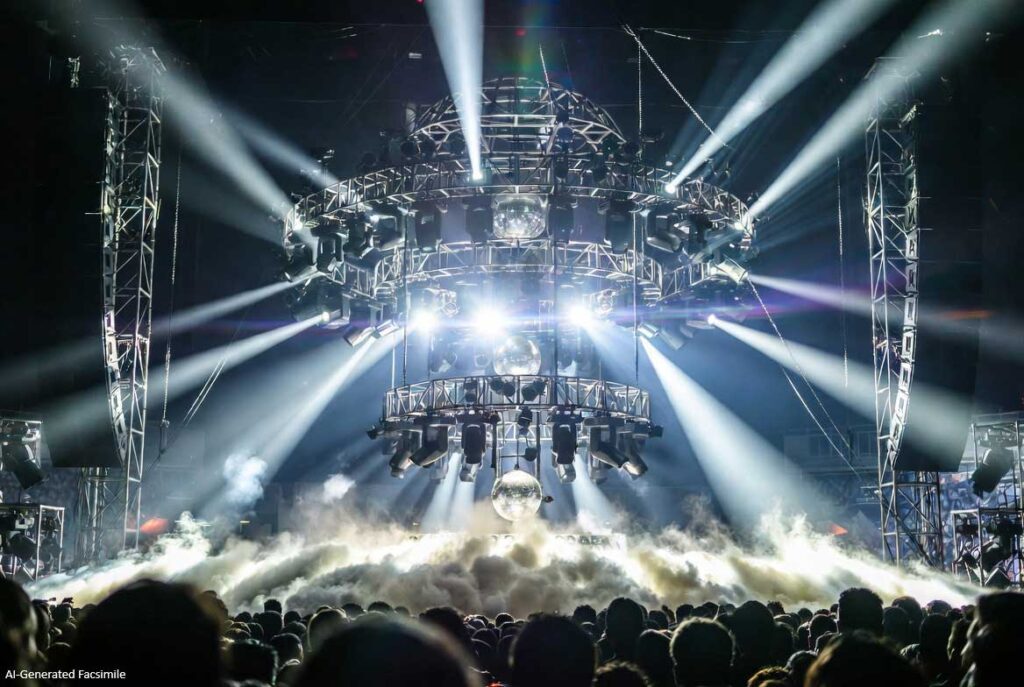
The rig itself was a monster of 1980s rock engineering. Built around the band’s signature “pizza oven” truss system (a huge circular array of par cans, spotlights, and follow spots that could bathe an entire stadium in blinding white light), it weighed several tons on its own and required its own fleet of cargo containers. Queen’s crew had packed virtually every piece of production gear the band owned. Tour manager Gerry Stickells later admitted the gamble felt a bit insane. Previous visiting acts had watched their gear quietly “confiscated” by local authorities. Super Trouper spotlights still stenciled with Earth, Wind & Fire logos were being rented back to Queen by the very corrupt officials who had previously seized them.
Customs in Buenos Aires was a military checkpoint. Armed teenage conscripts lined the corridors at Ezeiza Airport. Freddie Mercury, Brian May, Roger Taylor, and John Deacon were whisked through without a single bag being opened, thanks to high-level “facilitation.” But the real drama was unfolding in the cargo bays where forty tons of gear sat in crates marked for rock-and-roll war. Argentine officials knew exactly what was inside, and the band’s advance team were well aware of the horror stories: equipment from earlier tours had simply vanished into the system, reappearing later under new ownership
To get everything in, Queen’s crew played a high-stakes game of bureaucratic chess. Special permits were secured, military escorts appeared at every loading dock, and according to multiple accounts from the era, strategic “inducements” helped oil the wheels. In a later leg of the tour, the same crew bribed Mexican border guards to issue visas for 18 people instead of the official limit of six per day. South America was no different; the politics clearly demanded pragmatism. The lighting rig, the scaffolding, the artificial grass to blanket the notorious moat at Vélez Sarsfield Stadium (where political prisoners had once been held)—all of it cleared customs under the watchful eyes of soldiers who were simultaneously guarding the band and monitoring the crowds.

Once inside the stadiums, the payoff was undeniable. On February 28, 1981, the first of five Argentine shows drew 300,000 screaming fans across two nights and marked the largest single-concert crowd in the country’s history at the time. The massive “pizza oven” lighting rig turned the pitch into a blazing cathedral of rock and roll. White beams sliced through the night sky, mirrors flashed, and the stage pulsed like some bizarre living machine. In São Paulo a few weeks later, 131,000 fans filled the Morumbi stadium, setting a world record for a single-act audience. When 130,000 voices joined Freddie on “Love of My Life,” the moment transcended the logistical nightmare that made it possible.
Still, the shadow of seizure never fully lifted. Stickells spent the entire tour wondering whether the rig as well as the rest of Queen’s gear would be allowed to leave the country. Every night when the lights came up, the crew held their breath. It was clear that the equipment had become a symbol of defiance: a British band refusing to scale down for a continent the rest of the rock world had ignored. By the time the final crates were loaded onto outbound jets, it became clear that the gamble had paid off. Queen left South America not only as conquering heroes but as pioneers who proved stadium rock could thrive under the most unlikely conditions—even a corrupt Communist regime.
The story has become rock legend precisely because it was never just about the music. It was about 40 tons of steel, glass, and ambition slipping past armed guards and suspicious customs agents in a politically volatile region. The massive lighting rig wasn’t smuggled in the Hollywood sense that included midnight runs or false-bottom crates but was instead maneuvered through a system designed to extract, confiscate, and control. Queen turned potential disaster into one of the most audacious victories in touring history.