Mace in the Face, Cuffs on Stage: The Doors’ Defiant Night in New Haven
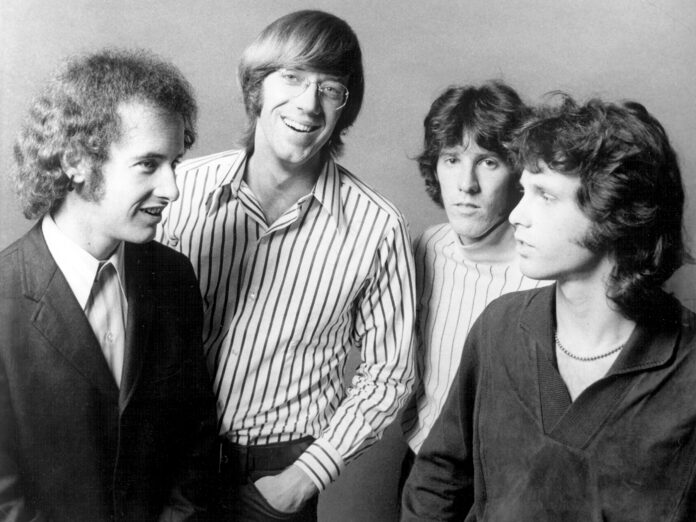
American rock group The Doors L-R Robby Krieger, Ray Manzarek, John Densmore and Jim Morrison pose for an Electra Records publicity still circa 1967. (Photo by Electra Records/Michael Ochs Archives/Getty Images)
On December 9, 1967, Jim Morrison made rock ’n’ roll history in the unlikeliest of places: the New Haven Arena in Connecticut. Before the final chord of The Doors’ set faded, the leather-clad Lizard King was dragged offstage in handcuffs, becoming the first major rock star ever arrested mid-performance. What began as a backstage flirtation escalated into a full-blown confrontation with authority, a profanity-laced onstage rant, and a mini-riot that spilled into the streets. It was pure 1960s chaos: sex, rebellion, and police overreach colliding under arena lights.
The Doors were riding high that winter. Their breakthrough single “Light My Fire” had topped the charts earlier in the year, turning the Los Angeles misfits into counterculture icons. Frontman Morrison, keyboardist Ray Manzarek, guitarist Robby Krieger, and drummer John Densmore drew sellout crowds with their dark, psychedelic blend of blues, jazz, and poetry. New Haven was just another stop on a grueling tour. Until a local cop decided to change everything.
Half an hour before showtime, Morrison slipped into a backstage shower area with an 18-year-old female fan. The pair were making out when a New Haven police officer who was hired for security—apparently unaware he was confronting a rock star—ordered them to leave. Morrison, never one to back down, responded with characteristic defiance. As you might expect, accounts vary slightly on the exact words, but the gist was unmistakable: “Eat it.” The officer warned him once, then sprayed Mace directly into Morrison’s face.
Crew members sprung into action and quickly rinsed Morrison’s eyes with water. The officer, realizing his major mistake, even apologized and at that, he incident seemed to be over. Morrison, however, still stinging from the chemical burn and the insult to his ego, carried the grudge with him onto the stage.
The band launched into their set with the usual fire. During an instrumental break in “Back Door Man,” Morrison grabbed the mic and began recounting the story to the 5,000-strong crowd. He described the backstage encounter in vivid, profanity-laced detail, mocking the police and turning the incident from a personal slight into a broader indictment of authority. To everyone’s surprise (except for the cops) the arena lights suddenly blazed on. Lt. James Kelly of the New Haven Police Department stepped forward, seized the microphone, and announced the show was over. Two officers grabbed Morrison and hauled him offstage as the music died.

Pandemonium erupted. Fans surged forward; some climbed onto the stage. A melee spilled outside, leading to at least 13 additional arrests. Morrison was charged with breach of peace, resisting arrest, lewd and obscene performance, indecency, and inciting a riot. He spent several hours in custody before being released on $1,500 bond posted by the band’s lawyer. Most charges were later dropped but Morrison paid a modest $25 fine for disturbing the peace and skipped his court date, forfeiting the bond.
History has not considered the New Haven incident as a one-night spectacle and eventually cemented its place as rock legend. Morrison’s mugshot from the early hours of December 10th perfectly captured the era’s rebellious spirit. The band later wove the memory into their 1970 song “Peace Frog,” with its haunting line: “Blood in the streets in the town of New Haven.” Biographers, Oliver Stone’s 1991 film The Doors, and countless retellings have kept the story alive as a symbol of the generation gap and the rock star’s war with the establishment.
The New Haven Arena itself is long gone, having been demolished in 1974 and replaced by a coliseum that has since met its own fate. Yet that unforgettable night endures as a milestone: the moment when a backstage beef became front-page news. Morrison’s arrest didn’t tame him; if anything, it fueled the myth. In an era when “question authority” was much more than a bumper sticker, The Doors turned a macing into music history.