The Tale Behind The Tune: “Roundabout” by Yes
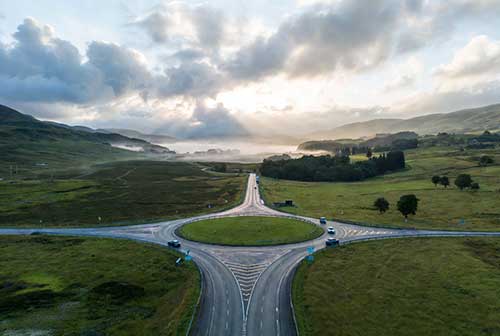
This one stands as one of my favorite progressive rock tracks of all time and probably one of the first I ever heard from that genre. Released in 1971 as the opening piece on the album Fragile, it showcases the group’s intricate musicianship, poetic lyrics, and innovative studio techniques. Its creation stemmed from a simple road trip that sparked a collaborative masterpiece.
In late March 1971, Yes was nearing the end of a tour promoting their previous album, The Yes Album. The band members were traveling in a transit van from Aberdeen to Glasgow in Scotland. Along the route, they encountered dozens of traffic roundabouts, perhaps as many as 40 according to Jon Anderson. The repetitive circling motion, combined with the dramatic Scottish landscape of mountains and hills, inspired Anderson and guitarist Steve Howe. As they sat in the back of the van, the pair began sketching ideas. Anderson jotted lyrics in a notebook, capturing vivid images such as mountains coming out of the sky and standing there. The journey also carried with it a personal touch. Anderson looked forward to reuniting with his wife Jennifer in London within 24 hours, which directly influenced the line about being home with his love soon. A nearby loch added to the imagery with the phrase “in and around the lake.”
Upon reaching their hotel in Glasgow, Anderson and Howe continued developing the song. Howe worked on the memorable acoustic guitar introduction, a haunting minor-chord progression that sets the tone. The piece started as fragments, with Howe contributing intricate guitar parts that blended classical and rock influences. The band later refined these ideas during rehearsals.
By August 1971, Yes had entered Advision Studios in London to record Fragile. This time the lineup featured a key change with the addition of keyboardist Rick Wakeman, who replaced Tony Kaye. Wakeman brought new textures to the creative process with a Hammond organ, Moog synthesizer, piano, and Mellotron. Producer and engineer Eddy Offord also played a crucial role alongside the band. The recording process involved layering ideas on a 16-track machine. The famous opening combined a backwards piano chord sequence, suggested by Wakeman, with Howe’s acoustic guitar recorded in the studio corridor for better resonance. The rhythm section of bassist Chris Squire and drummer Bill Bruford provided a solid yet dynamic foundation, while Anderson delivered his ethereal vocals.

Much of the song evolved through on-the-spot studio improvisation and careful editing. The band rehearsed sections individually before assembling the full eight-and-a-half-minute track to form the final product. Wakeman’s organ solo in the middle section came together quickly, often in a single inspired take. Transitions between verses, choruses, and instrumental breaks required precision to maintain flow. The result was a complex structure with shifting time signatures, soaring melodies, and rich harmonies. Anderson’s free-form lyrics blended abstract nature imagery with themes of travel and reunion, creating an inviting yet mysterious atmosphere.
“Roundabout” highlighted Yes’s ambition to push progressive rock boundaries as it balanced technical skill with emotional accessibility. An edited single version reached number 13 on the US Billboard Hot 100, introducing the band to a wider audience without diluting its progressive essence. Band members later reflected on the song’s organic growth from a van ride conversation to a polished studio creation.
The track’s success helped define Yes’s sound during their classic era. Its swirling energy and masterful arrangement continue to captivate listeners decades later. “Roundabout” remains a testament to how everyday experiences, like a winding drive through the countryside, can fuel extraordinary musical innovation when combined with talented collaboration and studio creativity.