The Wall That Rocked the World: Pink Floyd’s Epic Onstage Barrier
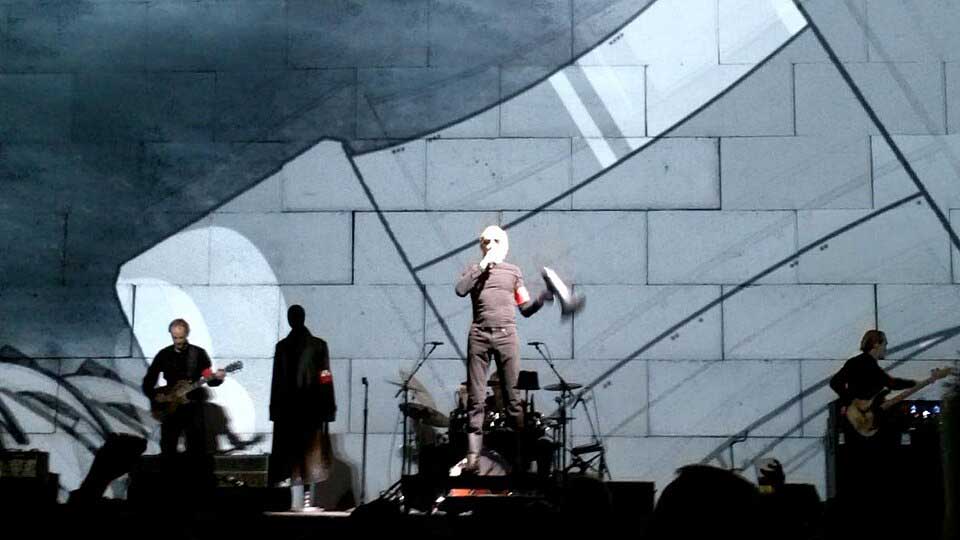
Photo Credit: GabeMc (commons.wikimedia.org/wiki/User:GabeMc)
In the history of rock music, few events match the boldness and symbolism of Pink Floyd’s The Wall live tour. Created as a theatrical expansion of their 1979 double album, the shows did more than just play music; they constructed an actual wall onstage, brick by cardboard brick. This transformed an album about isolation into a powerful, immersive experience. It wasn’t just a theatrical display; it was a strong statement about alienation, fame, and human disconnection that captivated audiences and reshaped what a rock concert could be.
The idea came from Roger Waters’ growing frustration with live performances. After a 1977 concert in Montreal, where he spat on a fan in the front row, Waters thought about the invisible barrier between the artist and the audience. “I was struck by the thought that there was a huge wall, that you couldn’t see, between me and the audience,” he later explained. What started as a metaphor turned into a physical structure: a massive wall built during the show, ultimately separating the band from the crowd.
The Wall Tour kicked off on February 7, 1980, at the Los Angeles Memorial Sports Arena. Only 31 shows took place across England, the United States, and Germany between 1980 and 1981, making tickets extremely hard to find. The production was groundbreaking and enormously expensive. Designed with architect Mark Fisher and animator Gerald Scarfe, the stage featured a wall that grew to a total of 30-35 feet high and 160-230 feet wide, depending on the venue. It consisted of around 400-424 reinforced cardboard bricks, each about 5 feet wide and 2.5 feet tall, stacked carefully by stagehands using hydraulic lifts and platforms.
During the first half of the concert, while playing tracks like “In the Flesh?” and “The Thin Ice,” the wall gradually rose. Roadies, staying in character, added bricks quickly to keep up with the album’s pace. By “Goodbye Cruel World,” the last song of the first act, the wall was complete, completely blocking the band from view. The audience faced a blank, imposing facade which served as a strong representation of the album’s themes of psychological barriers, trauma from war, overprotective parenting, and the isolating effects of rock stardom.
During the intermission and the second half, the finished wall became a giant projection screen for Scarfe’s surreal animations: marching hammers, strange schoolmasters, and the well-known inflatable figures, including a giant mother and a teacher puppet. Songs like “Hey You,” “Comfortably Numb,” and “Run Like Hell” featured David Gilmour performing his famous guitar solo on top of the wall under a single spotlight, with his shadow stretching dramatically across the arena. Other effects included a model airplane crashing into the structure and pyrotechnics.

The band performed much of the show from behind or on the wall, using pre-recorded elements and precise timing to create the illusion. The climax was both cathartic and chaotic. At the end, after “The Trial,” the entire wall collapsed in a controlled manner, symbolizing the emotional breakdown and tentative freedom of the main character, Pink, as well as Waters himself. Bricks fell as the audience cheered, a moment of release after nearly two hours of tension. The collapse was designed to be safe and repeatable, with internal scaffolding ensuring stability during construction. Critics and fans called it revolutionary. The New York Times described the wall’s construction as the “principal theatrical conceit,” highlighting its elaborate mix of film, puppets, and music.
The tour’s ambition came at a cost because it financially strained the band and contributed to internal conflicts that led to Waters’ exit after The Final Cut. Yet its influence lives on. Roger Waters revived the concept for his 2010-2013 The Wall Live tour, adapting it for stadiums with updated visuals, anti-war messages, and even larger dimensions (up to 230 feet wide). Modern productions still reflect its essence in arena shows.
Beyond the spectacle, the onstage wall represented Pink Floyd’s values. The album, influenced by Waters’ loss of his father during World War II and his own personal struggles, used the barrier as a complex symbol. Building it live forced audiences to confront separation in real time. “All in all, you’re just another brick in the wall,” the lyrics stated; onstage, fans saw that idea made real.
The production’s legacy lies in its blend of rock, theater, and design. It pioneered the modern mega-concert, inspiring U2’s Zoo TV, Madonna’s theatrical tours, and others. Only a few original Wall shows took place, but recordings, bootlegs, and the 1982 film adaptation preserved the magic. Today, exhibits like the Rock & Roll Hall of Fame’s The Wall display pay tribute with bricks and props.
Pink Floyd’s literal wall wasn’t just a gimmick; it was performance art at its finest, a 160-foot metaphor that separated and then united. In an age of pyrotechnics and LED screens, its simplicity and boldness remain unmatched. As Waters reflected, it turned alienation into connection, one brick at a time. For those lucky enough to witness it, the experience was unforgettable: a wall built, a barrier broken, and rock history forever changed.