Greta Van Fleet: Saviors of Rock or Corporate Creation?
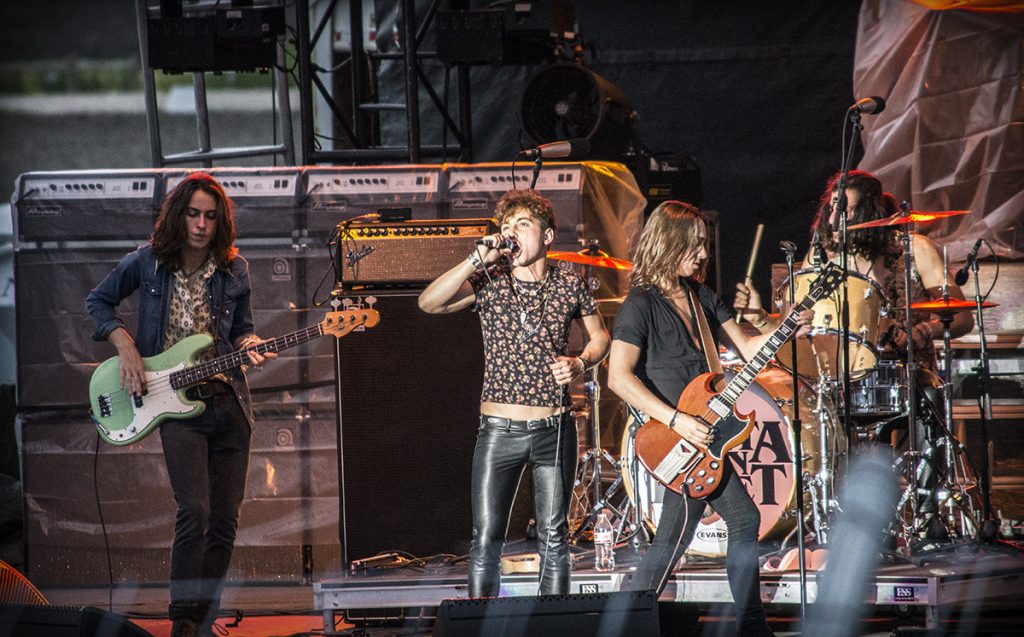
Photo by Troy Larson
What is the deal with Greta Van Fleet? There is no question that they are very much a classic rock style group that is very reminiscent of Led Zeppelin. I have listened to their music and continue to do so since I really like it. I am not alone. Their soaring vocals, powerful riffs, and energetic live shows have drawn massive crowds and chart success. Yet recently there have been stories claiming they are not a real band. Critics and online commentators allege the group was constructed by a record company for the sole purpose of making money by tapping into nostalgia for 1970s rock. These narratives paint Greta Van Fleet as an industry plant or manufactured act rather than an authentic group of musicians. But a close look at their history reveals a more nuanced story rooted in organic beginnings, rapid label support, and the timeless debate over musical originality versus commercial packaging.
The band formed in 2012 in the small town of Frankenmuth, Michigan. Twin brothers Josh and Jake Kiszka, along with their younger brother Sam and a friend named Kyle Hauck, started jamming in the family garage. Jake had dreamed of forming a band, and the siblings bonded over their parents’ vinyl collection of blues and folk records. They recruited Sam on bass and Hauck on drums.
The name Greta Van Fleet came from a local woman named Gretna Van Fleet, who approved the slight variation. Early sessions focused on covers and originals, with the group playing marathon sets in local bars. The initial guitar riff for their future hit “Highway Tune” dates back to 2010, when Jake was still a teenager. By 2013, Danny Wagner had replaced Hauck on drums, completing the lineup that remains today: Josh on lead vocals, Jake on guitar, Sam on bass and keyboards, and Danny on drums. They recorded a live EP in one take in 2014 and landed local exposure when “Standing On” appeared in Chevrolet Equinox ads in the Detroit area. Producer Al Sutton at Rustbelt Studios took them under his wing around that time, mentoring the young musicians on recording techniques and helping them develop professionally over roughly two years.
This was no overnight assembly by executives. The members were high school students when they began, writing and performing without any major backing. They built a local following through sheer persistence, long before any label interest. Sutton’s connections eventually led to management with Aaron Frank at ABI, who then introduced them to Jason Flom, founder of Lava Records. Flom signed the band in March 2017 to a multi-album deal after hearing their potential. He described them as “the future of real rock and roll,” viewing them as a time-capsule act capable of reviving a beloved genre. Their debut EP, Black Smoke Rising, followed in April 2017, featuring “Highway Tune,” which rapidly climbed the rock radio charts. A double EP called From the Fires arrived later that year and won a Grammy for Best Rock Album in 2019. Their full-length debut, Anthem of the Peaceful Army, dropped in 2018 and sold strongly, debuting high on Billboard charts. Subsequent albums like The Battle at Garden’s Gate in 2021 and Starcatcher in 2023 continued the momentum, with sold-out tours and global streams in the millions.
The core of the controversy lies in their undeniable sonic resemblance to Led Zeppelin. Josh Kiszka’s high, wailing vocals echo Robert Plant, while Jake Kiszka’s guitar work draws direct comparisons to Jimmy Page’s bluesy, intricate style. Songs such as “Highway Tune,” “Safari Song,” and “When the Curtain Falls” feature driving rhythms, mystical lyrics, and dynamic shifts that sound like they were pulled straight from the 1970s. Early on, the band downplayed these parallels in interviews. They insisted influences came more broadly from blues, jazz, and other classic acts like Rush, Queen, and the Doors. Jake later admitted he had studied Page intensely for a year, but the group maintained that Josh’s voice developed naturally to cut through loud instruments. This reluctance understandably fueled accusations of inauthenticity. Rock icon Robert Plant himself weighed in with a mix of praise and sarcasm, calling them “Led Zeppelin I” and referring to Josh as “a beautiful little singer. I hate him.” Critics seized on the similarities as evidence of creative bankruptcy rather than homage.

The backlash intensified with professional reviews. Pitchfork awarded Anthem of the Peaceful Army a scathing 1.6 out of 10, labeling the music “stiff, hackneyed, overly precious retro-fetishism” and accusing the band of copying Zeppelin’s style without matching their creativity or musicianship. Other outlets echoed this, arguing the group rendered rock stagnant by recycling old ideas without innovation. Online forums and social media amplified the critique, with some users branding them a “Zeppelin cover band” or “boy band version of Led Zeppelin.” Terms like “industry plant” and “fake band” proliferated. Detractors pointed to the major label push from Lava and its parent company Republic Records as proof of construction for profit. They noted the band’s young age at signing, between 19 and 22, and suggested executives whisked them away before they could develop broader influences or pay traditional dues on the road. One perspective argued that Republic actively tried to position them as the next rock tentpole in an era dominated by pop and hip-hop, packaging nostalgia for older fans while marketing to a new generation hungry for old school guitar rock. Videos and articles have called their image “meticulously crafted” and their rapid rise too polished to be organic, implying management curated every aspect for commercial appeal.
These claims of outright fabrication do not hold up under scrutiny. Greta Van Fleet existed as a self-started garage band for five full years before signing. They wrote their own songs, performed live extensively, and developed their sound independently. No evidence suggests label executives assembled the members like a manufactured pop act or dictated their music from the start. Flom discovered them through existing demos and connections, not by auditioning strangers for a concept project. The band has consistently performed their material live without heavy reliance on production tricks, and members have spoken about evolving their style over time. Later albums incorporate more progressive and personal elements drawn from touring experiences and broader musical tastes, including jazz for Sam and folk for Danny. Josh has addressed the criticism directly, noting that honoring rock’s lineage does not erase their identity. Supporters argue that every successful band receives label marketing, and Greta Van Fleet’s case is no different from historical acts that drew inspiration from predecessors. In an industry where classic rock radio still thrives, their success fills a genuine void for fans tired of auto-tuned pop swill.
The band has grown in response to the noise. By the time of Starcatcher in 2023, they explored more experimental territory. Jake and Sam have discussed becoming more conscious of their influences and pushing boundaries to avoid repetition. Their live shows remain a testament to raw talent, with extended jams and high-energy performances that win over skeptics. Commercial metrics back their legitimacy: multiple number-one rock singles, Grammy recognition, and consistent arena sellouts. While early hype may have accelerated their exposure, the foundation was always there in the Michigan garage.
In the end, the Greta Van Fleet story highlights broader tensions in rock music. Nostalgia sells, and labels will always chase profitable trends. Detractors who call them constructed overlook the years of unpaid work that preceded the deal. At the same time, valid questions remain about originality in a genre that prizes innovation. Greta Van Fleet did not invent classic rock, but they did revive it for a new audience at a moment when many declared the style dead. Whether they evolve into something truly distinct or remain a nostalgic footnote depends on future output. For now, the evidence shows they are very much a real band, one that started with passion and gained the machinery of the industry. The stories of fabrication say more about cultural skepticism toward success than about the musicians themselves. Rock has always thrived on debate, and Greta Van Fleet has certainly provided plenty of that.