The Rise of Boston: From a Basement Studio to Arena Rock Legends
In the mid-1970s, a new sound emerged from the city of Boston that would go on to define arena rock for a generation. At the heart of it was Tom Scholz, an unlikely rock star who combined technical precision with soaring melodies. The band he created, simply named Boston, blended powerful guitars, memorable hooks, and high-pitched vocals into a style that dominated the radio waves. Their 1976 debut album became one of the best-selling releases in rock history, but the story behind the band involves years of quiet determination, legal battles, and changing lineups.
Tom Scholz was born Donald Thomas Scholz on March 10, 1947, in Toledo, Ohio. He showed an early interest in music and mechanics. After high school, he moved east to attend the Massachusetts Institute of Technology, where he earned a master’s degree in mechanical engineering. While at MIT in the late 1960s, Scholz began writing songs and joined a local band called Freehold. There he met guitarist Barry Goudreau and drummer Jim Masdea. In 1970, vocalist Brad Delp joined the group. These connections would prove essential in the years ahead.
After graduating, Scholz took a job as a product design engineer at Polaroid. He used his salary to build a professional recording studio in the basement of his home in Watertown, Massachusetts. There, he spent countless hours perfecting his songs, playing most of the instruments himself. He recorded demonstration tapes with Delp on vocals, Goudreau on guitar, and Masdea on drums. Scholz tirelessly shopped the demos to record labels for years, facing repeated rejections. Many executives could not believe the polished sound came from a basement rather than a big studio.
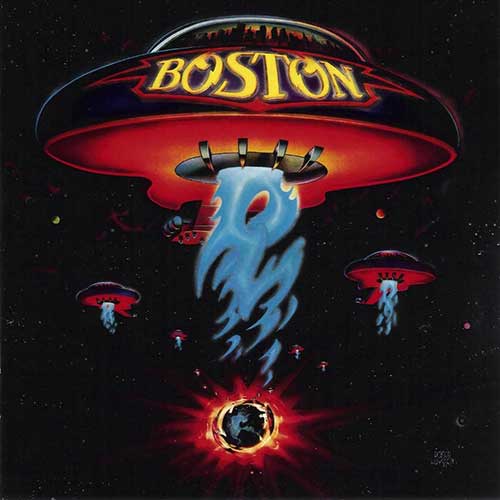
Persistence eventually paid off in 1975 when Scholz signed a deal with Epic Records. The label insisted on a full band for live performances, so the group officially formed as Boston. The lineup included Scholz on guitar and keyboards, Delp on lead vocals, Goudreau on guitar, Fran Sheehan on bass, and Sib Hashian on drums. Masdea contributed to some recordings but was not in the initial touring group. Scholz produced the album himself, maintaining tight control over every detail. The result was the self-titled debut album, released on August 25, 1976.
I will admit that I don’t have a lot of vivid memories from 1976 but buying Boston’s debut album is one of them. I don’t know what was going on elsewhere, but Boston had been enjoying plenty of exposure on the Boston-based rock radio stations I grew up listening to and I knew I had to have that album. I recall sitting in my car in the store parking lot checking out the artwork on that iconic album after I purchased it. There wasn’t much time between the time I walked through the door at home and popping that new record on the turntable.
The album exploded onto the charts. Hits like “More Than a Feeling,” “Peace of Mind,” and “Foreplay/Long Time” showcased Scholz’s innovative guitar work and Delp’s powerful, emotional voice. The record sold millions quickly, eventually reaching over 17 million copies in the United States alone. Boston became one of the biggest new rock acts of the decade. Their sound, often described as melodic hard rock with progressive elements, appealed to fans who loved both heavy riffs and catchy choruses.
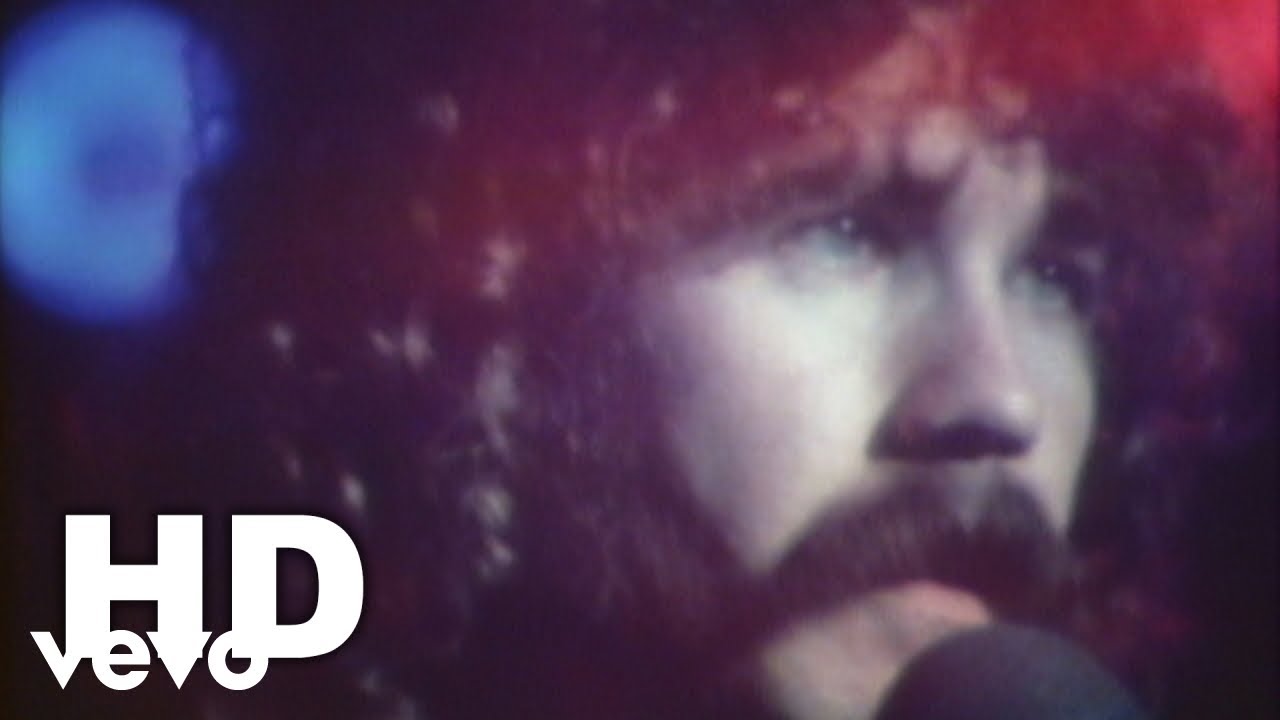
Success—as it often does—brought pressure. The band released their second album, Don’t Look Back, in 1978. It reached number one and sold well, but critics noted its similarity to the debut. Scholz’s perfectionism slowed the process for the next record. Legal disputes with the record label and internal tensions added further delays. Guitarist Barry Goudreau left in 1981, followed by Sheehan and Hashian. By the time Third Stage arrived in 1986, only Scholz and Delp remained from the original core. The album topped the charts, driven by the hit ballad “Amanda.”
Lineup changes became a recurring theme. Delp left the band temporarily in the late 1980s but returned for the 1994 album Walk On. New members joined, including guitarist Gary Pihl, who has remained a steady presence. Fran Cosmo took on vocal duties during Delp’s absence. The band released Corporate America in 2002, showing a shift toward more modern production while keeping their signature style.
Tragedy struck in 2007 when Brad Delp died by suicide at age 55. His voice had defined Boston’s sound, and his loss deeply affected fans and the remaining members. Scholz continued the band with new vocalists, including Tommy DeCarlo, who served as lead singer until his death in 2026. Other longtime contributors like Gary Pihl have helped maintain the group’s live presence.
Over the decades, Boston has sold more than 75 million records worldwide. Scholz not only led the band but also invented the Rockman amplifier, which influenced guitar tones for many artists. He has balanced music with philanthropy and engineering work. The group has faced lawsuits, long gaps between albums, and personnel shifts, yet their music continues to resonate today. Songs from that 1976 debut still receive heavy radio play.
Boston’s story reflects the vision of one determined engineer who turned basement experiments into stadium anthems. While the lineup has evolved, the core elements of soaring guitars and emotional vocals remain. For fans like myself, who grew up with the band in the 1970s, Boston represents a golden era of rock that combined technical skill with pure melodic power. Even today, new generations of fans delight in the discovery of the magic that started in a quiet Massachusetts basement.