Main Menu
Classic Rock News And Views
Browse: Classic Rock Gear Classic Rock Ringtones Classic Rock Posters
September 8, 2009
Music Video Games Take More Flack From Rock Legends
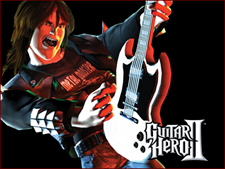
As the wildly-popular music video games Rock Band and Guitar Hero continue to sign new groups on to distribution deals, more classic rock luminaries are speaking out against them, saying that the games discourage young people from spending the time and investing the required effort to learn how to play a real instrument.
Most recently, Pink Floyd drummer Nick Mason and former Rolling Stones bassist Bill Wyman have commented on the new generation of games.
“It encourages kids not to learn, that’s the trouble. It makes less and less people dedicated to really get down and learn an instrument. I think it’s a pity so I’m not really keen on that kind of stuff,” Wyman said. For some young people
that may be true, but on the other hand, I do not think that those with a genuine passion for music will be satisfied with a game and a computer-generated audience.
Mason has apparently had his share of first-hand experience with the games and was dismayed to see his own children playing them. Sounding a bit more concerned about the whole phenomenon than Wyman, Mason says he was actually “irritated” by his kids’ involvement with the games.
“If they spent as much time practicing the guitar as learning how to press the buttons they’d be damn good by now,” according to Mason. He’s probably right, but the real question is, do his kids really want to be musicians or do they just enjoy playing popular video games?
On the other hand, Mason also admits that Pink Floyd has not ruled out the possibility of getting involved with a video game like Rock Band or guitar hero, and concedes that groups have to look at new ways of selling their music. One does have to make a living after all.
Mason sounds a bit melancholy about the days when the album was king, and I suppose it’s hard to fault him for that, since a lot of us have fond memories of that era.
“I’m of the old guard who are really sad about that, because I always liked the concept of the album – rather than just cherry-picking tracks – and also the business of the art work that went with it,” says Mason.
As you would expect, the makers of the games come to the defense of their creations, and claim that the games actually stimulate interest in music among young people, many of whom go onto learning how to play a real instrument.
I tend to agree with the game makers, as I have done in the past. I believe those that are destined to become musicians will soon put down the plastic guitar or step away from the fake drum kit to take up the real thing.
I suppose that the only definitive answer will be known sometime in the future. Perhaps some researcher can look back and determine if the number of musicians in countries where these games are popular decreased, increased or remained the same. Surely there are numerous factors involved, including population and the economy, but I suppose researches are paid to sort those kind of things out.
For more, visit the BBC website.
June 23, 2009
Jimmy Page And Jack White No Guitar Heroes
Not in the virtual world of video games anyway. It’s probably safe to say that neither of the two real-life guitar heroes have spent much quality time with either of the two wildly popular music-themed video games “Guitar Hero” and “Rock Band.” In fact, both Page and White recently shared their thoughts about the new genre of games.
“It’s depressing to have a label come and tell you that [Guitar Hero] is how kids are learning about music and experiencing music," said White. "If you [the artist] have to be in a video game to get in front of them, that’s a little sad.”
Page also added his two cents, saying, “You think of the drum part that John Bonham did on Led Zeppelin’s first track on the first album, ‘Good Times Bad Times’," he said. "How many drummers in the world can play that part, let alone on Christmas morning?”
Kind of hard to argue with that one. That particular Zeppelin song has been a favorite of mine for years, and surely takes a drummer with a quick foot and great sense of timing to pull it off properly.
I’ve mostly considered the popularity of these games as a good thing, since they seem to have been instrumental (I’m not even going to say it) in introducing a younger generation of fans to some great classic rock music, and I dare say that some of them have become fans as a result.
For the kids who don’t have any plans to actually learn how to play an instrument, and that’s probably the majority of them, it seems there would be little harm in allowing them to have a little fun pretending to be a rock star. It is a bit discouraging to think that it could sway someone who has some interest in learning a real instrument away from the hard work and time that’s necessary and taking the easy way out with a fake guitar and a video game.
I suspect, however, that the young people who are really passionate about playing will not have their goals derailed by the existence of a video game. Think about how many other kinds of video games are there out there for a moment. Will there be fewer future NASCAR drivers because of “NASCAR Kart Racing” or fewer aspiring car thieves because of “Grand Theft Auto?” Now, that would be something, but I don’t think these games have the dampening effect on the aspirations of young people that others seem to.
Although I can see the point that Jack White and Jimmy Page are trying to make, I don’t think these new games are having as negative an impact as they suggest. I can honestly say that I don’t think games like that would have deterred me from playing (real) drums if they had been around when I was a kid. I think it would have only increased my desire to get my hands, or sticks as the case may be, on the real thing.
I suppose some statistician could track the emergence of new bands in the coming years and perhaps come to some conclusions about whether or not games like “Guitar Hero” and “Rock Band” actually diminished the number of young people who decided to learn to play a real instrument, but that probably won’t happen.
I’m not terribly concerned. I think the kids who are serious and dedicated enough to learn on a real instrument will be able to pull themselves away from the game console and invest the time and effort required to become a musician because they realize the value of the sense of accomplishment they will experience. To say nothing of how much fun it is to get together with a few other people and just jam. A game cannot replicate that experience.
And there’s always that possibility, however remote, that learning how to play the real thing could be the start of a journey that lands them on a real stage in front of a few thousand screaming fans some day.
Thanks go out to NME.
June 3, 2009
Van Halen News Busting Out All Over
Things have been kind of quiet on the Van Halen news front lately. Other than ex-Mrs. Van Halen’s hot bikini pics all over the place, we haven’t heard too much from anyone connected with the group for a while.
There are clearly things in the works, and it’s clear that we can expect some new material from the veteran rockers as well as a tour coming in a year or so. In addition, video game players who have always wanted to play along with a virtual version of guitar legend Eddie Van Halen also have something to look forward to.
From the E3 video game expo, which wraps up tomorrow in Los Angeles, we get word that a new title will be coming to the “Guitar Hero” series called “Guitar Hero: Van Halen.” No real surprise regarding the name, but more interesting is the additional content that’s part of the game, and will allow players to go beyond rocking with VH and play along with the likes of guest players such as Queen, Blink 182 and Weezer.
Moving from the virtual world of rock into the real world, a recent interview with Eddie Van Halen that appeared in Rolling Stone magazine sheds light on issues surrounding the future plans for the group, the departure of former bassist Michael Anthony and Eddie’s recent appearance on Spike TV to accept his “Guy’s Choice Guitar God” award.
It was backstage at the event in Culver City, CA where Rolling Stone caught up with the reclusive Van Halen, who admits he never “goes to anything” and is a bit nervous about going out to accept the award, adding that, “I don’t even know what to say. Especially sober, shit.”
As for the future of Van Halen the band, there are plans to get back to work after his wedding and honeymoon. Van Halen is marrying publicist Janie Liszewski on June 27th and plans to get back onto the studio with the rest of the group upon his return. Van Halen also says they are planning a tour sometime next year.
As we have come to expect from Van Halen the group, there are numerous versions of how the various feuds and departures played out throughout their stormy history. For his part, Van Halen had nothing but praise for his on-again-off-again frontman, David Lee Roth. Declaring that things are different now because they are both sober, Van Halen describes his new experience with the group as “a wonderful feeling.”
As one might expect, comments reserved for ex-VH bassist Michael Anthony are not as complimentary. With respect to Anthony’s departure from the group, Van Halen says, “The funny thing is that everyone who quits the band always claims they got fired by me. Hey, I’m not the bad guy here. When Hagar left the band, Mike went with him. Then when we get back together with Dave, and all of a sudden, he wants back in. It’s like, ‘No, dude, you quit the band.’”
Interestingly, Van Halen denies hearing any of Chickenfoot’s material, and adds that he doesn’t listen to anything. One has to wonder, however, if the denial might just be a reflection on the bad blood between him and his two former band mates. Who wouldn’t be a little curious about what two of your ex-buddies are up to these days, especially since finding out is as easy as a little typing and a few mouse clicks?
Seems a little hard to believe that he hasn’t heard a single note from Hagar and Anthony’s new gig. The bridge that was burned after the end of that relationship is not showing any signs of reconstruction, that’s for sure.
Spike TV’s “Guy’s Choice Awards” is scheduled to air on June 21 at 10:00 PM.
The entire interview can be accessed on the Rolling Stone website.
January 13, 2009
Guitar Hero 3 First Video Game To Pull In $1 Billion
With the explosion in interest around video games in the last few years, it’s interesting to see that the first individual video game to rack up $1 billion in sales is one that’s all about music – much of it that can safely be considered classic rock, to boot!
Mike Griffith, publishing CEO for Activision announced recently that Guitar Hero 3: Legends of Rock has generated $1 billion in sales. Griffith revealed the news of the milestone at the Consumer Electronics Show, which wrapped up a couple of days ago in Las Vegas.
One particularly interesting fact relayed by Griffith was that Guitar Hero: Aerosmith sold more than three times as many units during the first week of its release as did the group’s most recent album. Perhaps an indication of the way consumers – at least younger ones – are moving when it comes to how they want their musical entertainment presented.
These music-themed games continue to have a significant impact on sales of more traditional products like CD’s, since groups that have been featured on Guitar Hero games have experienced an increase in music downloads between 15 and 843 percent.
Seeing so many classic rock acts featured on games like Guitar Hero and Rock Band has to be heartening to many fans like myself who grew up with this music, and are now beginning to see a whole new generation of young people being turned on to what many of us consider to be the best music of all time.
It looks like whomever coined the phrase “Rock and Roll will never die,” just may have been right.
September 16, 2008
Guitar Hero Has Aerosmith Soaring To New Heights
News from the gaming industry is proving that veteran rockers like Aerosmith can make a very significant contribution to their bottom line by forging deals with game makers.
A lot of credit has been given to games like Guitar Hero and Rock Band for bolstering interest in classic rock, particularly among the current generation of young people — credit that is most likely well-deserved.
Given the enormous popularity and publicity that this genre of video games has received in recent years, perhaps it
should come as no surprise that sales of Guitar Hero: Aerosmith has raked in more revenue for the group than any other individual album they have produced.
In a roundabout way, I suppose this benefits all classic rock fans, since one might presume that the kind of success attained by Aerosmith could inspire other classic acts to consider hopping on the video game band wagon. I think it might be safe to assume that titles with names such as “Guitar Hero: Led Zeppelin” or “Guitar Hero: Rolling Stones” would be met with impressive commercial success for game makers and recording artists alike.
In fact, Activision has announced plans to triple the number of its total released Guitar Hero games and content by 2010, so it looks like we may indeed see game versions like those fictional titles I just mentioned.
Getting back to my reasoning regarding how all classic rock fans may benefit from this phenomenon, more new games means more young people being exposed to more classic rock acts, which provides those groups with additional monetary incentive to keep on creating new music, and touring in front of a new generation of fans. I’m sure some of us from earlier generations will also be there to help pack the venues, but probably be less likely to be seen standing in front of our televisions with a plastic guitar replica slung across our shoulder.
With word from the music industry about the illegal downloading of music, and how they say it is hurting recording artists, this relatively new genre of video games may help some artists recoup those reported losses. It sounds like a win-win situation, with the possible exception of some parents who may be tiring of the endless renditions of “Dream On” emanating from the living room TV.
For more on this story, see Gamasutra.com.